China Top Fitness Equipment What Should Buyers Know?

Time:2026-10-25 Author:Liam
0%

Choosing China’s top fitness equipment requires more than comparing prices, product photos, and factory promises. Buyers should understand how equipment performs in real training spaces. A treadmill may look impressive online, yet its motor can feel weak under continuous use. A cable machine may seem affordable, but loose pulleys can create noise, friction, and safety concerns.

Before asking, “What should I know before starting fitness training,” consider your training goal, available space, user weight, workout frequency, and maintenance capacity. A home beginner needs different equipment from a commercial gym. Measure doorways and floor areas carefully. Check frame materials, welding quality, belt thickness, resistance systems, warranty terms, spare-part availability, and technical support. Ask for test reports, production samples, and clear inspection records. Certifications can support trust, but they do not replace hands-on testing.

Dr. Robert Sallis, a physician and founder of Exercise is Medicine, stated, “Exercise is Medicine.” That simple sentence carries an important warning: equipment should support safe, consistent movement, not encourage reckless intensity. Buyers should inspect emergency stops, adjustment points, cable limits, and user instructions before ordering large quantities.

Some purchasing decisions remain imperfect. A lower price can hide shipping damage, difficult assembly, or expensive replacement parts. Even experienced buyers sometimes overlook noise levels or after-sales response time. Request videos from active production lines. Speak with existing customers when possible. The best supplier is not always the largest one; it is the partner that documents quality, answers specific questions, and keeps supporting the equipment after delivery.
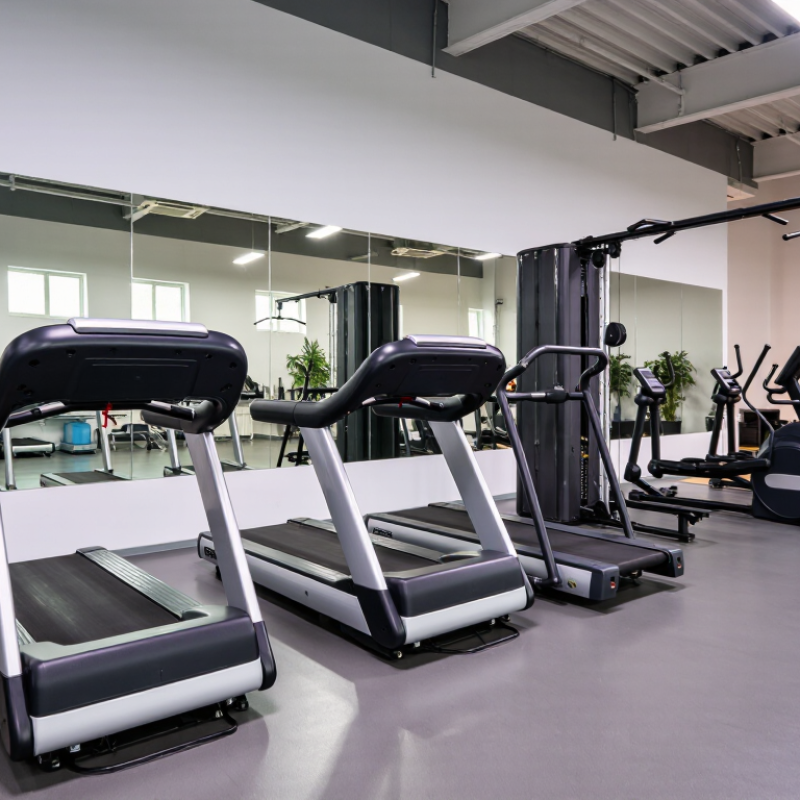
China Top Fitness Equipment What Should Buyers Know?

What Defines China’s Top Fitness Equipment Manufacturers?

China’s top fitness equipment manufacturers are defined by engineering discipline, not showroom size. Grand View Research valued the global fitness equipment market at about USD 16 billion in 2023, with continued growth expected through 2030. This pressure rewards factories that can control quality at scale. Buyers should inspect material records, weld consistency, cable fatigue tests, and final-load testing. A serious manufacturer provides dated inspection reports, not vague promises.

Standards matter. ISO 20957 covers safety requirements for stationary training equipment, while ASTM and EN testing methods help verify durability and user protection. Leading Chinese factories usually combine these standards with documented quality systems, calibrated testing tools, and traceable production batches. The 2024 ACSM Worldwide Survey also placed wearable technology and strength training among major fitness trends. Manufacturers should therefore support accurate sensor integration, stable software connections, and easy component replacement. Small details matter.

Ask for evidence.

Factory experience becomes visible during difficult orders. Can the team maintain dimensions across hundreds of units? Can it supply replacement parts after several years? Can engineers adjust cushioning, frame geometry, or resistance settings for different users? China’s manufacturing advantage is strong supply-chain coordination, but it is not automatic. A polished showroom can hide weak after-sales procedures. Even capable factories may overlook packaging damage or unclear manuals. Buyers should audit the process, test samples independently, and record every agreed specification before production.

China Top Fitness Equipment: What Should Buyers Know?

What defines a top fitness equipment manufacturer? Buyers should verify product safety, quality management, environmental practices, after-sales support, and customization capability instead of relying only on price or appearance.

The chart presents a practical buyer-verification framework. ISO 9001, ISO 14001, ISO 45001, CE-related conformity requirements, documented testing, spare-parts support, and factory customization are commonly used evidence points when evaluating suppliers. These are evaluation categories, not company rankings.

Which Fitness Equipment Categories Are Made in China?

China Top Fitness Equipment: What Should Buyers Know?

China produces a wide range of fitness equipment, not one single product type. Its strongest categories include treadmills, exercise bikes, ellipticals, rowing machines, strength racks, benches, dumbbells, weight plates, resistance bands, and yoga accessories. Commercial gyms often source cable stations and selectorized machines from Chinese factories. Home users usually choose compact cardio equipment and adjustable weights. The category lines are not perfectly clean.

The Global Wellness Institute valued the global physical activity economy at about US$1.1 trillion in 2023.

Its report highlights fitness services, equipment, and active recreation as major segments. International Trade Centre data under HS 9506 also identifies China as a leading exporter of sports and fitness equipment.

These figures support China’s manufacturing scale, but they do not prove equal quality across suppliers. A low-cost treadmill may use a weaker motor, thinner steel, or limited testing. That difference matters.

Tips:

Ask for the exact product category, HS code, motor rating, steel thickness, and load test records. Request samples before placing a large order. Check noise levels, packaging protection, spare-part availability, and user manuals. For connected equipment, review software support and data-security practices. Factory photos are useful, but independent inspections are stronger evidence. Some buyers focus too heavily on unit price. That is a costly mistake. Even reputable reports use different definitions, so compare their methods before trusting market figures.

How to Evaluate Equipment Quality, Safety, and Certifications

China Top Fitness Equipment: What Should Buyers Know?

The physical activity economy reached about $1.06 trillion in 2022, according to the Global Wellness Institute’s 2024 report. Demand is strong, but quality varies between factories. Buyers should inspect materials, not only attractive specifications. Check steel thickness, weld consistency, coating adhesion, cable ends, and moving joints. Ask for fatigue-test results under realistic loads. A machine rated for 150 kilograms should not feel unstable at 100 kilograms.

Safety documentation deserves equal attention. ISO 20957 covers safety requirements for stationary training equipment. ASTM F2276 provides useful guidance for fitness equipment design and testing. For electrical machines, request reports from an accredited laboratory. CE marking may show conformity for applicable European requirements, but it is not a universal quality certificate. Verify the declaration, model number, test standard, and issuing laboratory. Documents with inconsistent dates or vague product names deserve careful questioning.

Tips: Request a sample unit before a large order. Film noise, belt movement, and frame flex during testing. Compare the sample with mass-production drawings. Also inspect spare-part availability and warranty procedures. WHO reported that 31% of adults worldwide, or about 1.8 billion people, were insufficiently active in 2022. That supports long-term demand, yet it does not excuse weak equipment. A perfect certificate cannot reveal every design weakness. I have seen polished reports miss uncomfortable user details, so independent testing remains worth the cost.

How to Compare Pricing, Customization, and Minimum Order Quantities

China Top Fitness Equipment: What Should Buyers Know?

Price comparisons often look simple, but the quoted number rarely tells the full story. Ask whether it includes steel grade, coating, packaging, testing, and delivery terms. A low factory price may exclude molds, spare parts, or export cartons. Compare the landed cost, not only the unit price. Request a written quotation with identical specifications. Small differences matter.

Customization can change both cost and production time. A new frame color may be easy, while changing dimensions requires drawings, samples, and fresh testing. Confirm logo placement, upholstery material, cable thickness, and load ratings before approval. Request a pre-production sample. Check welds, bolt alignment, surface finish, and moving parts. Photos help, but they can hide rough edges. A physical sample is harder to misunderstand.

Minimum order quantities also need careful discussion. Some suppliers set separate quantities for colors, packaging, or custom parts. Ask whether several models can share one production order. Clarify deposits, balance payments, inspection timing, and replacement procedures. My early comparisons focused too heavily on unit price. That was a mistake. A slightly higher quote sometimes included better packaging and fewer damaged cartons. Buyers should also question unusually low prices. Savings are useful, but unexplained savings deserve attention.

What to Check Before Shipping and After-Sales Support

China’s fitness equipment sector serves a growing global market. The Global Wellness Institute reported that the physical activity economy reached about US$1.06 trillion in 2023. However, attractive pricing should never replace shipment checks. I once trusted factory photos too much. The delivered machines had scratched frames and mismatched cables.

Before shipping, buyers should request a signed pre-shipment inspection report. Check welds, paint thickness, moving joints, control panels, and emergency stops. Test every unit under realistic load, not only when empty. Confirm carton dimensions, gross weight, spare parts, manuals, and serial numbers. The equipment should match the approved sample exactly. Record videos with visible dates and model numbers. A third-party inspection is worthwhile when the order is large or technically complex.

Tips: Ask for a 12-month parts plan and a clear response-time promise. The contract should define who pays for defective parts, customs damage, and repeat delivery. Request an online service demonstration before payment. Check whether technicians can explain fault codes in clear English. The World Health Organization estimates that 31% of adults worldwide do not meet recommended activity levels, so demand may remain strong, but maintenance expectations are also rising. After-sales support must include troubleshooting guides, replacement-part availability, warranty exclusions, and escalation contacts. Some suppliers promise “lifetime support.” That phrase is vague. Require measurable terms instead. A practical weakness remains: remote diagnosis cannot always identify noise, vibration, or assembly errors accurately. Test locally before opening every carton.

China Top Fitness Equipment: What Should Buyers Know? — What to Check Before Shipping and After-Sales Support

Check Area What Buyers Should Verify Recommended Evidence or Acceptance Criteria When to Check Priority Practical Buyer Note
Product Specifications Confirm dimensions, net weight, user weight limit, motor rating, speed range, resistance levels, and adjustment options. Approved technical specification sheet matching the purchase order and final production sample. Before production and during final inspection High Small specification differences can affect installation space, shipping cost, and user safety.
Intended Use Determine whether the equipment is designed for home, light commercial, or full commercial use. Written duty-cycle information, recommended daily operating hours, and user environment requirements. Before quotation and order confirmation High Commercial equipment normally requires stronger frames, longer duty cycles, and more accessible replacement parts.
Safety Construction Inspect frame stability, guards, emergency-stop functions, moving-part protection, cable routing, and pinch-point controls. Functional safety test records, clear warning labels, and inspection results for all accessible moving components. Pre-shipment inspection High Test the equipment under operating conditions rather than relying only on photographs.
Electrical Compatibility Check voltage, frequency, plug type, power consumption, grounding requirements, and control-panel compatibility. Electrical specification label, wiring diagram, applicable conformity documents, and destination-market plug configuration. Before production and before shipping High Electrical requirements vary by destination; incorrect voltage or plug configuration may delay installation.
Materials and Finish Verify steel thickness, coating quality, upholstery material, stitching, welds, fasteners, and corrosion protection. Material description, color reference, weld inspection, surface-finish check, and sample approval. During production and final inspection Medium Check high-contact areas carefully because poor upholstery, paint, or welding can increase maintenance costs.
Performance Testing Test motion smoothness, noise, vibration, resistance accuracy, belt tracking, console functions, and recovery after power interruption. Recorded test results using agreed operating conditions and a signed inspection checklist. Before loading the shipment High Agree on measurable pass criteria in advance, especially for noise, speed, incline, and resistance performance.
Software and Connectivity Confirm display language, workout programs, Bluetooth or Wi-Fi functions, data compatibility, and update requirements. Demonstration video, software version record, user instructions, and confirmation of supported devices or applications. Before final approval Medium Do not assume connected features will work in every country or with every mobile operating system.
Packaging Protection Review carton strength, internal cushioning, moisture protection, spare-part placement, and protection of painted surfaces. Packaging photos, drop or vibration test records when applicable, and a packing list inside each shipment unit. Before container loading High Packaging should protect heavy components from impact, movement, moisture, and compression during transit.
Shipping Documents Check commercial invoice, packing list, transport document, country-of-origin information, manuals, and required declarations. Document set reviewed before dispatch and consistent with the purchase order and customs requirements. Before shipping High Incorrect descriptions, quantities, or weights can create customs delays and unexpected import charges.
Installation Requirements Confirm floor requirements, assembly tools, electrical outlets, ceiling clearance, anchoring needs, and installation sequence. Assembly manual, installation drawings, tool list, and site-preparation checklist. Before delivery High Prepare the site before arrival to avoid storage fees, installation delays, or equipment damage.
Warranty Coverage Clarify warranty duration, covered components, exclusions, labor responsibility, shipping responsibility, and claim conditions. Written warranty terms attached to the sales contract and translated for the service team. Before order confirmation High A warranty is more useful when it clearly defines response times and responsibility for defective parts.
Spare Parts Availability Identify wear parts such as belts, rollers, cables, bearings, upholstery, batteries, sensors, and control boards. Spare-parts list with part numbers, prices, recommended stock quantities, and expected availability period. Before purchase and during installation High Keep critical wear parts available locally when downtime would affect gym operations.
Technical Support Verify support channels, service hours, troubleshooting procedures, remote assistance, and escalation contacts. Written support process with expected response time and contact details for technical questions. Before shipment and after installation Medium A documented support process is preferable to relying only on informal messaging.
Replacement and Repair Understand how defective parts are diagnosed, approved, packed, shipped, and replaced. Return-material procedure, fault-report template, photo or video requirements, and replacement authorization process. Before order confirmation High Agree on who pays freight and labor when a confirmed manufacturing defect occurs.
Training and Manuals Check whether operators receive installation, maintenance, cleaning, inspection, and user-operation training. Complete manuals, maintenance schedule, training materials, and sign-off record after commissioning. At delivery and installation Medium Correct training reduces misuse, premature wear, and avoidable warranty claims.
Final Acceptance Inspect quantity, model, accessories, visible damage, serial or tracking numbers, functionality, and documentation. Signed delivery acceptance report with photographs and a list of open issues, if any. Immediately after delivery High Record transport damage before signing an unconditional delivery receipt.
Maintenance Planning Establish inspection frequency, lubrication requirements, cleaning procedures, calibration checks, and replacement intervals. Preventive-maintenance schedule based on operating hours and equipment type. After installation and during operation Medium Routine maintenance helps preserve performance and may be required to keep warranty coverage valid.

FAQS

What defines a reliable fitness equipment manufacturer?

Engineering discipline matters more than showroom appearance. Reliable factories provide material records, weld checks, cable-fatigue tests, and final-load reports. Ask for dated evidence. Promises are not enough.

Which safety standards should buyers review?

Ask whether the equipment follows recognized stationary-equipment safety standards. Testing should cover durability, user protection, moving parts, and emergency stops. Request calibration records for testing tools.

How can buyers evaluate production consistency?

Ask the factory to produce several samples from different batches. Check frame dimensions, weld positions, paint coverage, cables, and control panels. Small differences can become expensive later.

What should be checked before shipment?

Request a signed inspection report before loading. Test each machine under realistic weight, not only when empty. Record videos showing dates, model numbers, and visible defects. Independent inspection is useful for large orders.

How can buyers prevent packaging and delivery problems?

Confirm carton size, gross weight, serial numbers, manuals, and spare parts. Inspect corners, foam protection, and exposed metal surfaces. I once trusted factory photos too much. The delivered frames had scratches and mismatched cables.

What should an after-sales agreement include?

Define spare-part availability, response times, warranty limits, and escalation contacts. Clarify who pays for defective parts, customs damage, and repeat delivery. Avoid vague promises such as “lifetime support.” Use measurable terms instead.

How should buyers assess technical support?

Request an online service demonstration before payment. Technicians should explain fault codes in clear English. They should also provide troubleshooting guides and replacement-part instructions. Good support needs practical detail.

Can remote diagnosis solve every equipment problem?

No. Remote support may miss noise, vibration, or assembly errors. Test equipment locally before opening every carton. A video call helps, but it is not perfect. That limitation deserves honest planning.

Conclusion

China’s top fitness equipment manufacturers are defined by consistent product quality, strong engineering capabilities, reliable production systems, and experience serving different market needs. Buyers can find a wide range of equipment made in China, including strength machines, free weights, cardio equipment, functional training tools, home gym products, and accessories. Before purchasing, evaluate materials, construction, user safety, testing procedures, and relevant certifications. It is also important to confirm whether the supplier can provide clear technical documents and stable quality control.

Pricing should be compared alongside customization options, production lead times, warranty terms, and minimum order quantities rather than judged by unit cost alone. Buyers should also clarify packaging, inspection procedures, spare parts, installation guidance, shipping responsibilities, and after-sales support before placing an order. For individual users asking, “What should I know before starting fitness training,” selecting safe, durable, and suitable equipment is essential. A careful review of the manufacturer, product specifications, service process, and total purchasing cost can help reduce risks and support a more successful fitness investment.

Liam

Liam

Liam is a dedicated marketing professional with a profound expertise in the industry, where he excels at highlighting the unique advantages of our core products. With a keen understanding of market trends and consumer needs, Liam frequently updates our company’s professional blog, providing......