How to Choose the Best Extra Thick Yoga Mat for You?

Time:2026-03-13 Author:Liam
0%

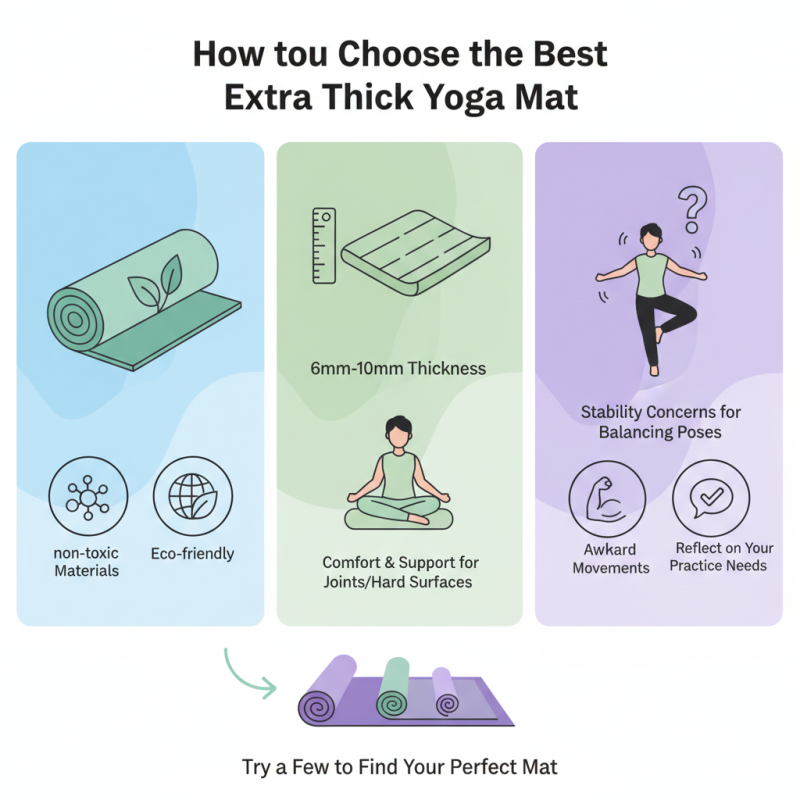
Choosing the right yoga mat is vital for your practice. An Extra Thick Yoga Mat can provide more comfort and support. It is especially important for those with joint issues or for practicing on hard surfaces.

When selecting an Extra Thick Yoga Mat, consider the material. Look for non-toxic options that are eco-friendly. Thickness matters too; an extra thick mat usually ranges from 6mm to 10mm. This added cushioning can enhance your experience.

However, finding the right balance is tricky. An overly thick mat might affect stability during balancing poses. It can make some movements feel awkward or difficult. Reflect on what you need most from your practice. Your perfect Extra Thick Yoga Mat is out there, but you may need to try a few before you find the right one.
How to Choose the Best Extra Thick Yoga Mat for You?

Understanding the Importance of Thickness in Yoga Mats: Industry Insights

When choosing a yoga mat, thickness plays a vital role. A thicker mat can provide better cushioning. This is especially important for those with joint issues. It can also help to avoid discomfort during long sessions. However, a mat that is too thick may hinder stability. You might feel less grounded in poses like downward dog or warrior.


The industry offers mats with varying thicknesses. The standard thickness is around 1/4 inch. This size works for many practitioners. But if you often practice on hard surfaces, a mat that is 1/2 inch thick could be your best choice. Yet, some users find this height a bit cumbersome. Striking a balance between comfort and stability can be challenging.


It’s essential to consider your individual needs. Beginners might prefer a thicker mat for extra support. More experienced yogis might feel better with a thinner option. Reflect on your practice style and preferences. Trial and error may lead you to discover what works best for you. Remember, there's no one-size-fits-all answer in yoga mats. Finding the right thickness can enhance your experience on the mat.

Evaluating Material Choices: Pros and Cons of Extra Thick Yoga Mats

When selecting an extra thick yoga mat, material matters. Different materials offer unique benefits and drawbacks. For example, PVC mats are popular due to their durability and affordability. They provide excellent grip but can be less eco-friendly. If sustainability is a priority, consider natural rubber mats. These offer a great feel and grip but may wear down faster.

TPE is another option, known for its lightweight and non-toxic qualities. It feels soft underfoot, making your practice comfortable. However, durability can be an issue with frequent use. Some yogis might find the firmness of certain mats, like cork, uncomfortable. It's essential to consider how each material feels and performs based on your personal practices.

Choosing the right mat involves a balance of comfort, longevity, and eco-friendliness. Reflect on how often you practice and the types of yoga you engage in. Making a choice often requires trade-offs. Some mats look great but lack the necessary support. Prioritize what features matter most to you, and remember—there is no perfect mat for everyone.

Assessing Grip and Stability: Key Features to Look For in Yoga Mats

When selecting an extra thick yoga mat, grip and stability should be your main focus. A yoga mat that offers a solid grip reduces the risk of slipping during poses. According to a recent study, around 40% of yoga practitioners experience discomfort due to slipping mats. Therefore, a material with high friction is essential. Look for mats made from natural rubber or TPE; they often provide excellent grip without sacrificing comfort.

Stability in a yoga mat is just as crucial. Mats thicker than five millimeters tend to offer better cushioning for your joints. However, the flip side is that excessive thickness can hinder balance. A study indicated that users prefer mats around six to eight millimeters thick for optimal comfort while maintaining stability. Texture plays a vital role, too. A textured surface enhances the user’s ability to ground themselves during challenging poses.

Take the time to assess how a mat feels during your practice. Some may find an extra thick mat too cushioned, making balancing poses challenging. Reflect on your own experience and preferences. The right mat should enhance your practice, not complicate it. Be mindful that comfort can sometimes mask instability, leading you to question whether your mat is truly the best fit for your needs.

Finding the Right Size and Weight: Tailoring Your Yoga Mat to Your Needs

Choosing the right size and weight for your extra thick yoga mat can greatly enhance your practice. According to a survey by the Yoga Alliance, 74% of practitioners reported improved comfort and stability with a mat that fits their needs. A standard yoga mat is usually 68 inches long and 24 inches wide. However, if you are taller or have specific postural needs, you might need a longer mat. Mats up to 84 inches are available, catering to those who require that extra space.

Weight is another crucial factor. Heavier mats, typically around 5 to 6 pounds, offer more stability. However, they can be challenging to transport. A lighter mat, on the other hand, weighs about 2 to 3 pounds and is easier to carry. A study by the American Council on Exercise indicates that portability affects regular usage. Users often abandon heavier mats. Reflect on your routine: Do you travel for yoga? If so, a lighter mat might be more appropriate.

Lastly, consider thickness. Extra thick mats, often ranging from 5mm to 10mm, provide enhanced cushioning. These mats can be beneficial for knee and joint support during various poses. However, they may cause instability in balancing poses. It's vital to assess your personal needs and preferences. Are you prioritizing comfort or stability? Balancing these elements will help you find the optimal yoga mat for your practice.

Comparative Analysis: Pricing Trends for Extra Thick Yoga Mats in 2023

When considering extra thick yoga mats in 2023, price plays a significant role. Prices for these mats vary widely. You might find options ranging from affordable to premium ranges. The average cost of a good quality mat is around $60. However, luxury mats can exceed $150. This pricing trend highlights the importance of matching quality with your budget.

Materials used impact price significantly. Eco-friendly mats tend to be higher priced due to their sustainable materials. You might be tempted by cheaper options, but these often compromise on grip and durability. Users frequently report dissatisfaction with low-cost mats. They wear out quickly or lack support, leading to discomfort during yoga practice.

Discounts are common, especially online. Seasonal sales might help you snag a great deal. Watch for promotions, but stay cautious. Sometimes, the cheapest option isn't the best choice. This requires careful research and consideration. Ultimately, selecting a mat that meets your comfort needs is essential for a fulfilling practice.

How to Choose the Best Extra Thick Yoga Mat for You? - Comparative Analysis: Pricing Trends for Extra Thick Yoga Mats in 2023

Yoga Mat Thickness Material Type Price Range (USD) Weight (lbs) User Rating (Out of 5)
1/2 inch PVC $30 - $50 3.5 4.5
5/8 inch TPE $40 - $60 4.0 4.7
1 inch Natural Rubber $70 - $90 5.0 4.9
1/4 inch NBR Foam $25 - $45 2.5 4.0
3/4 inch Cork $60 - $80 4.5 4.8

FAQS

: What materials should I consider for an extra thick yoga mat?

: Look into PVC for durability, natural rubber for sustainability, or TPE for lightweight comfort. Each has pros and cons.

How does thickness affect my yoga practice?

Thicker mats offer cushioning, great for comfort. However, they can lead to instability during balancing poses.

What size mat should I choose?

Standard mats are 68 inches long. Taller individuals might need up to 84 inches for proper support and comfort.

Is the weight of the mat important?

Yes, heavier mats are stable but harder to transport. Lighter mats are easier to carry, encouraging regular practice.

How much should I spend on a yoga mat?

Prices range widely. Good quality mats average around $60, while premium options can exceed $150. Match quality to budget.

Are eco-friendly mats worth the extra cost?

Eco-friendly mats usually cost more but offer sustainability. Cheaper options may lack durability and lead to dissatisfaction.

How often should I replace my yoga mat?

Depending on usage and material, mats can wear out over time. Regular assessments can prevent discomfort during practice.

Can a mat affect my enjoyment of yoga?

Absolutely. A poor-quality mat can lead to frustration. Finding the right features ensures a more fulfilling practice experience.

What if I prioritize comfort over stability?

While comfort is essential, it may impede balance poses. Reflect on your practice style to find the right balance.

Are discounts on mats reliable?

Discounts can be tempting, but research is key. Cheaper mats may compromise quality. Choose wisely, even during promotions.

Conclusion

Choosing the right Extra Thick Yoga Mat involves several key considerations to enhance your practice. First, understanding the importance of mat thickness is crucial; thicker mats provide better cushioning, which can prevent injuries and support longer sessions. Evaluating material choices is also essential, as different materials offer varying levels of durability and eco-friendliness.

Additionally, assessing grip and stability is vital for maintaining balance during poses. When selecting an Extra Thick Yoga Mat, size and weight should cater to your personal needs, ensuring portability and comfort. Lastly, a comparative analysis of pricing trends in 2023 helps you find a mat that fits both your budget and quality expectations, allowing you to enjoy a fulfilling yoga experience.

Liam

Liam

Liam is a dedicated marketing professional with a profound expertise in the industry, where he excels at highlighting the unique advantages of our core products. With a keen understanding of market trends and consumer needs, Liam frequently updates our company’s professional blog, providing......