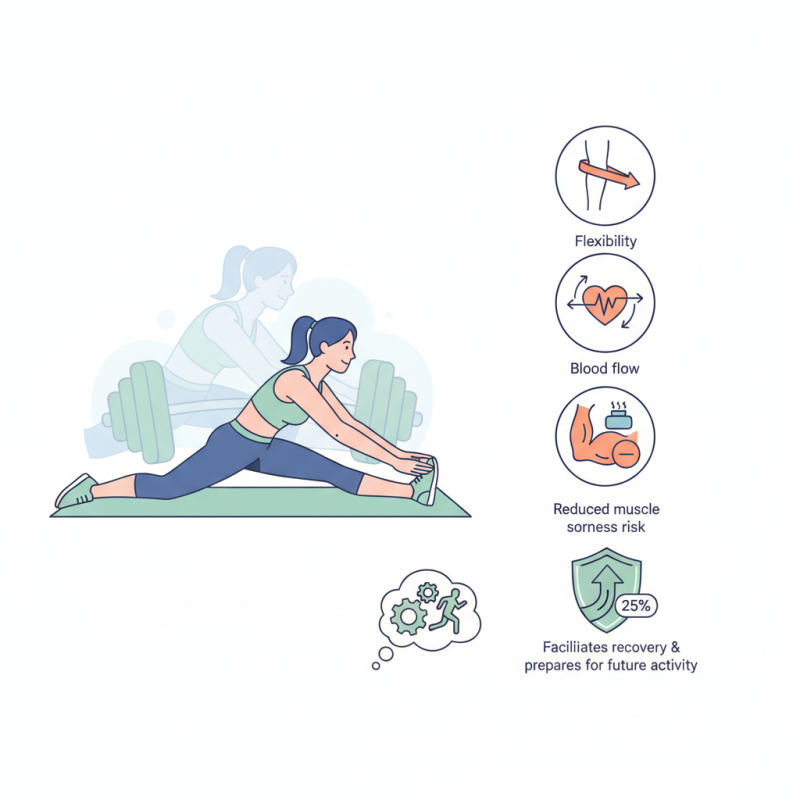
Stretching plays a crucial role in a well-rounded fitness routine. Post-workout stretching helps maintain flexibility, increase blood flow, and reduce muscle soreness. According to a study published in the Journal of Sports Sciences, regular stretching can decrease injury risk by 25%. Yet, many still overlook its importance.
Dr. Emily Thompson, a well-respected sports physiologist, states, "Why is stretching necessary after working out? It facilitates recovery and prepares muscles for future activity." Her research highlights that failing to stretch can lead to tighter muscles and prolonged recovery times.
Incorporating stretching can be challenging. Many people rush through their workouts and neglect this essential component. Familiarizing oneself with effective post-workout stretches can be beneficial. This approach not only aids in recovery but enhances overall performance. Reflecting on your routine might reveal missed opportunities for improvement and ongoing benefit. Stretching deserves more attention, as it complements your efforts in the gym.
Benefits of Stretching After a Workout
Stretching after a workout is crucial for recovery. It helps your muscles relax and prevents stiffness. When you push your body, tiny tears form in your muscles. Stretching can aid in repairing these tears. The result? Enhanced flexibility and better performance next time.
Aside from physical benefits, stretching offers mental relaxation. After an intense workout, taking time to stretch calms the mind. It’s a moment to breathe and reset. Many forget this step, often rushing home instead. This can lead to soreness later. A mindful stretch can enhance your overall experience.
Incorporating stretching into your routine can feel like a chore at first. It might seem unimportant compared to other training aspects. Yet, ignoring it can result in tight muscles. This can affect your next workout. Regular stretching can reduce injury risks. Investing those few extra minutes can ultimately improve your fitness journey.
Improved Flexibility and Range of Motion
Stretching after a workout is crucial for improving flexibility and range of motion. Research shows that regular stretching can increase flexibility by up to 30%. This enables joints to move more freely, enhancing overall performance. A study reported that flexible individuals have a reduced risk of injury. This is particularly important for athletes or anyone engaging in physical activity.
Incorporating stretching routines can help maintain muscle length. Tight muscles can limit movement and lead to discomfort or pain. Professionals recommend holding stretches for at least 30 seconds. This duration allows muscles to relax and lengthen properly. Neglecting this can result in a range of issues, from strained muscles to poor posture. No one wants that.
Many still skip this vital part of their routines. Some feel it's a waste of time, especially after a grueling workout. However, the benefits far outweigh a few minutes of stretching. Improved range of motion enhances everyday activities. Simple actions, like bending down to tie shoes, become easier. Yet, the decision to stretch often remains undervalued.
Reduction of Muscle Soreness and Tension
Stretching after a workout plays a vital role in reducing muscle soreness and tension. Studies show that regular post-exercise stretching can lower delayed onset muscle soreness (DOMS) by up to 30%. This sore feeling often hits the day after an intense workout. It results from micro-tears in muscle fibers. Stretching can help ease this discomfort.
When you stretch, blood flow to the muscles increases. This helps remove toxins that build up during exercise. Research highlights that stretching improves recovery time. It also enhances flexibility and range of motion, which can prevent injuries. A report from the Journal of Strength and Conditioning Research states that individuals who stretch after a workout report a 25% reduction in muscle tension.
However, many overlook stretching. Some may skip it due to time constraints or simply forget. This is where reflection is needed. Rushing through a workout without proper cool down can lead to stiffness. Listening to your body is crucial. Taking a few minutes to stretch can make a significant difference in your recovery and overall performance.
Why is Stretching Important After Workout Benefits Explained - Reduction of Muscle Soreness and Tension
| Benefit |
Description |
Scientific Support |
Recommended Duration |
| Reduction of Muscle Soreness |
Stretching can help relieve delayed onset muscle soreness (DOMS) after intense workouts. |
A study published in the Journal of Sports Science shows a decrease in DOMS with post-exercise stretching. |
5-10 minutes |
| Reduced Muscle Tension |
Stretching can help to reduce muscle tightness and improve overall flexibility. |
Research in Physical Therapy indicates that stretching reduces muscle stiffness significantly. |
10-15 minutes |
| Improved Flexibility |
Regular stretching increases the range of motion in joints. |
Studies show that consistency in stretching improves flexibility over time. |
15-20 minutes |
| Enhanced Recovery |
Stretching post-workout can promote quicker recovery by enhancing blood flow. |
A review in the Journal of Athletic Training supports this benefit. |
10 minutes |
| Reduced Risk of Injury |
Stretching may help to prevent injuries by preparing the muscles for activity. |
According to a meta-analysis, stretching can reduce the risk of injury by nearly 30%. |
5-10 minutes |
Enhanced Blood Circulation and Recovery
Stretching after a workout is crucial for enhanced blood circulation and recovery. After intense exercise, your muscles need to relax. Stretching helps maintain flexibility. When you stretch, blood flow increases. This brings essential nutrients to tired muscles. It also helps remove waste products, like lactic acid.
Tips: Focus on major muscle groups. Hold each stretch for 15 to 30 seconds. Don't bounce. Instead, ease into the stretch. Remember to breathe deeply. This breath helps calm your mind and body. A few minutes of stretching can make a difference in how sore you feel later.
While stretching is beneficial, many skip it. Some find it boring. Others are just too tired. It’s common to overlook this important step. However, making time for stretching can lead to better recovery. You'll feel more energized for your next workout. Prioritize those few minutes of stretching. Your body will thank you.
Importance of Stretching After Workout: Benefits Explained
Prevention of Injuries and Muscle Imbalances
Stretching after a workout is often overlooked, but it holds significant benefits. One key aspect is injury prevention. When muscles are engaged in rigorous activities, they become tight. This tightness can lead to strains or tears if not addressed. Incorporating stretching helps maintain flexibility. It encourages blood flow to the muscles, aiding in recovery.
Muscle imbalances are another concern for those who exercise regularly. Some muscles may get stronger, while others weaken. This can create uneven conditions, leading to discomfort or pain. Stretching provides a balance by promoting uniform muscle function.
For instance, if you focus on your quads during a workout but neglect your hamstrings, stretching the latter can restore equilibrium.
It's vital to listen to your body during stretching. Some might push too hard and risk injury. Not every stretch will feel comfortable, and that’s okay. Reflecting on your limits is essential for effective recovery.
Remember, stretching isn't just about feeling good; it's about ensuring your body functions optimally.
Conclusion
Stretching after a workout plays a crucial role in enhancing overall fitness and recovery. One of the primary reasons why stretching is necessary after working out is that it improves flexibility and increases the range of motion in joints, which can contribute to better performance in future exercises. Additionally, engaging in post-workout stretching significantly reduces muscle soreness and tension, allowing for a more comfortable recovery period.
Moreover, stretching enhances blood circulation, which aids in the delivery of essential nutrients to muscles, promoting quicker recovery. It also helps prevent injuries and muscle imbalances by addressing tightness and improving muscle coordination. Therefore, incorporating stretching into your post-workout routine not only supports physical health but also contributes to long-term athletic performance.

 Parnal Fitness