What are the best ways to exercise without equipment? The answer depends on your goals, fitness level, available space, and daily energy. Bodyweight training can strengthen major muscle groups through movements such as squats, push-ups, lunges, glute bridges, planks, and mountain climbers. A living-room floor can become a useful training area, even when you have only ten quiet minutes.
Good exercise does not require expensive machines. It requires sensible progression, controlled movement, and consistent practice. A beginner might start with chair-assisted squats and wall push-ups, then gradually increase repetitions or reduce rest time. More experienced exercisers may use slower tempos, single-leg variations, or timed circuits. Research from respected health organizations supports regular strength and aerobic activity, but personal experience still matters. Your knees may respond differently from someone else’s.
Listen carefully.
A practical routine should include a gentle warm-up, clear technique, and enough recovery between demanding sessions. Landing softly on a carpet, keeping the spine neutral during planks, and breathing steadily can reduce unnecessary strain. However, no exercise plan is perfect. I have sometimes focused too much on completing a workout and ignored early fatigue, which made the next session less effective. That mistake is worth noticing. Stop when sharp pain, dizziness, or unusual shortness of breath appears, and seek professional medical advice when necessary. With realistic expectations, equipment-free exercise can become stronger, safer, and easier to maintain.
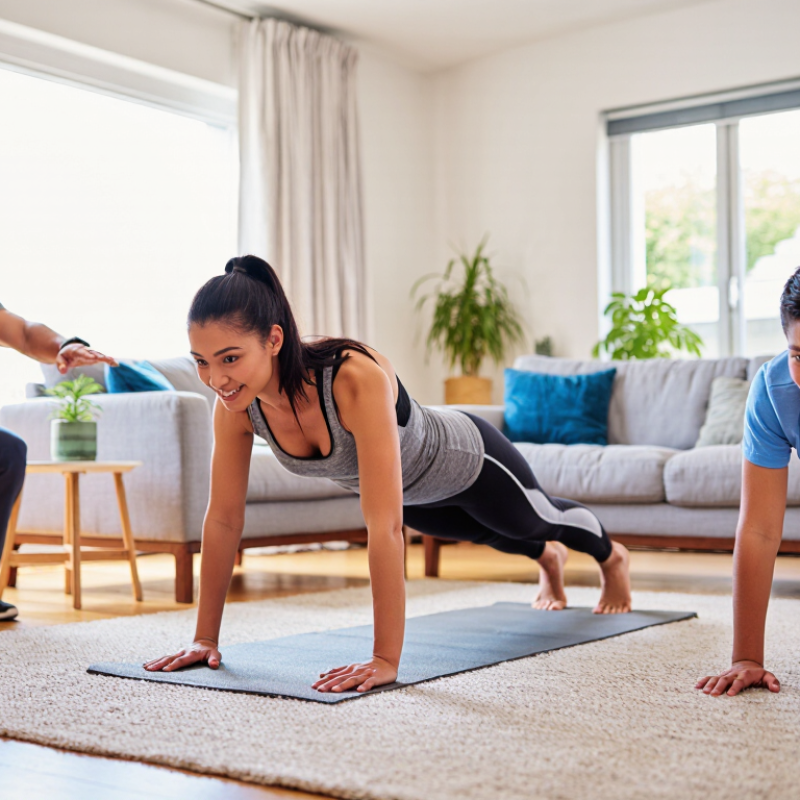
Equipment-free exercise uses body weight, floor space, and controlled movement instead of machines or weights. It includes squats, push-ups, lunges, planks, crawling, and brisk walking. The World Health Organization’s 2020 Guidelines recommend 150–300 minutes of moderate activity weekly, plus muscle-strengthening work on at least two days. Bodyweight training can support strength, balance, mobility, and daily movement skills.
The need is significant. The WHO’s 2022 Global Status Report on Physical Activity estimates that 31% of adults worldwide do not meet recommended activity levels. Equipment-free routines reduce cost and remove a common access barrier.
In my experience, a slow squat beside a kitchen chair can reveal weak balance quickly. That detail matters. However, bodyweight exercise is not automatically safe or complete. Poor form, rushed repetitions, or ignoring pain can undermine progress. The American College of Sports Medicine emphasizes gradual overload, consistent practice, and appropriate technique for resistance training. Without adjustable resistance, progression may require slower tempos, longer pauses, or harder variations.
Start with five minutes. Try eight squats, six incline push-ups, and a 20-second plank. Rest briefly, then repeat twice. Keep your knees aligned with your toes. Stop sharp pain, not ordinary effort. Record repetitions weekly. I sometimes progress too quickly, so a written log helps expose that mistake. Rotate movements across the week, and leave recovery time between demanding sessions.
It uses body weight, floor space, and controlled movement instead of machines or weights. Examples include squats, push-ups, lunges, planks, crawling, and brisk walking.
It can improve strength, balance, mobility, and everyday movement skills. It also reduces cost and removes equipment barriers.
Begin with five minutes. Try eight squats, six wall push-ups, and a 20-second plank. Rest briefly, then repeat twice.
Walk quietly in place for three minutes. Add shoulder circles, ankle rolls, and slow squats. You should feel warmer, not strained.
Keep your knees aligned with your toes, especially during squats. Move slowly and notice your hip, knee, and back positions.
Use slower repetitions, longer pauses, or more challenging variations. Progress gradually. I sometimes advance too quickly, which is worth correcting.
Work toward 150 to 300 minutes of moderate activity weekly. Add muscle-strengthening sessions on at least two days.
Stop for sharp pain, chest pressure, faintness, or unusual breathlessness. Seek medical advice when these symptoms appear. Ordinary effort is different.
Leave recovery time between demanding sessions. Sleep and rest support safer progress. I sometimes underestimate recovery when a workout feels easy.
Exercising without equipment is a practical and accessible way to improve strength, mobility, balance, and cardiovascular health. What are the best ways to exercise without equipment? Start by preparing your body with gentle warm-ups, such as arm circles, leg swings, marching, and controlled mobility movements. This helps increase circulation, activate muscles, and reduce the risk of strain. Bodyweight exercises, including squats, lunges, push-ups, planks, glute bridges, and mountain climbers, can build strength by using your own body as resistance.
Simple movements such as brisk walking, jogging in place, jumping jacks, high knees, or step-ups can raise your heart rate and improve endurance. For a balanced routine, combine strength exercises, cardio, mobility work, and rest days. Adjust the pace, repetitions, and difficulty to match your fitness level, focus on proper form, and progress gradually. With consistency and mindful movement, equipment-free exercise can become an effective part of a healthy lifestyle.

 Parnal Fitness