Starting a workout at home can feel less intimidating than entering a crowded gym. There is no waiting for equipment, comparing physiques, or worrying about perfect technique. You can begin beside a sofa, using a towel, a wall, and your body weight. This privacy may help beginners build consistency before adding heavier challenges.
How to start working out at home for beginners depends on realistic expectations. The World Health Organization recommends 150–300 minutes of moderate aerobic activity weekly, plus muscle-strengthening activities on at least two days. That target is useful, but it is not a starting requirement. Five minutes of marching, eight controlled squats, and gentle wall push-ups can create a safer first session. The American College of Sports Medicine’s Worldwide Survey of Fitness Trends 2024 also continues to recognize home exercise as an important fitness format, reflecting lasting demand for convenient training options. Convenience matters.
A beginner should choose movements that are easy to repeat and monitor. Keep a chair nearby for balance, clear loose cables, and stop when sharp pain appears. Record repetitions in a notebook, rather than trusting motivation alone. Progress may mean one extra repetition, steadier breathing, or fewer rest breaks. It may not look impressive. That is acceptable. Home workouts can fail when people copy advanced videos, train too hard, or expect rapid body changes. A qualified trainer or healthcare professional can help address injuries, chronic conditions, or uncertainty. The strongest plan is not the most dramatic one; it is the plan you can perform safely next week.
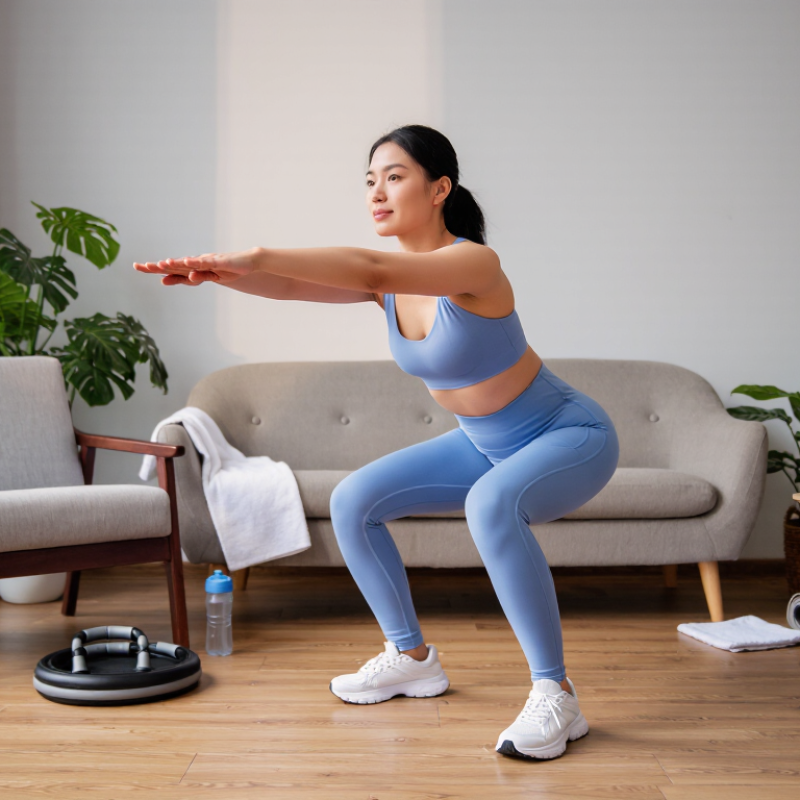
Starting workouts at home gives beginners a practical, low-pressure way to build healthy movement habits. You can exercise in a small room, using a chair, mat, or body weight. This removes travel time and reduces the discomfort of training around strangers. A familiar space may also make it easier to stay consistent. Consistency matters more than intensity during the first few weeks.
Home workouts can improve strength, balance, mobility, and daily energy when practiced safely. A beginner might start with squats to a chair, wall push-ups, marching in place, and gentle stretches.
These movements resemble everyday actions, such as standing, lifting, and climbing stairs. Keep the effort moderate. You should breathe steadily and maintain controlled movement.
Sharp pain is a warning, not a challenge. If you have a medical condition or long-term injury, professional guidance is sensible before exercising.
Tips: Set a simple schedule, such as 15 minutes on three days each week. Clear loose objects from the floor. Keep water nearby. Record repetitions, but do not chase numbers too quickly. I sometimes underestimate how tiring basic exercises feel, especially after a busy day. That is worth noticing. Rest days are part of progress. Stop if dizziness, chest pain, or unusual shortness of breath appears.
Home workouts can give beginners a calm place to learn basic movement. You control the pace, space, and amount of attention around you. A chair, wall, and clear floor may be enough. You do not need complicated equipment.
Choose exercises that match your current ability, not your ambition. Try slow squats to a chair, wall push-ups, marching in place, and gentle hip hinges. Keep your feet stable and your knees aligned with your toes. Move through a comfortable range, without forcing flexibility. You should breathe steadily and speak a short sentence during moderate exercise.
Start with five to ten minutes. That may feel almost too easy. It is often safer than chasing soreness. Stop if you feel sharp pain, dizziness, chest discomfort, or unusual shortness of breath. Muscle effort can be normal; joint pain deserves attention. A medical professional can advise you if you have an injury, chronic condition, or long period of inactivity.
Check your floor before moving. Remove loose rugs and keep water nearby. Wear supportive clothing and avoid exercising when tiredness affects your balance. Progress slowly by adding a few minutes or repetitions, not everything at once. I sometimes expect motivation to appear before action, but gentle movement often creates it. The plan may still need changing. That is not failure.
A useful home workout space does not need expensive equipment. Clear roughly two square meters near a wall or window. Leave room. A stable exercise mat can reduce slipping, while a chair supports balance during squats or step-ups. Resistance bands and one light pair of dumbbells add variety without crowding the room. Keep water nearby, and remove loose cables before training.
The World Health Organization recommends 150–300 minutes of moderate aerobic activity weekly, plus muscle-strengthening exercises on at least two days. A simple home space makes that target easier to approach in short sessions. The American College of Sports Medicine’s Worldwide Survey of Fitness Trends has repeatedly identified home-based exercise as a continuing fitness direction. That trend reflects convenience, but convenience alone does not guarantee safe progress.
Begin with ten to fifteen minutes, three days each week. Record repetitions, effort, and any discomfort in a notebook. A phone timer may help, but constant screen checking can interrupt form. Keep movements slow enough to control. A mirror can reveal rounded shoulders, although it cannot replace qualified instruction.
My first home setup included too much equipment and too little floor space. I rarely used half of it. Beginners should review the layout weekly and remove anything that creates hesitation. Mild muscle fatigue is expected; sharp pain, dizziness, or unusual breathlessness requires stopping and seeking professional medical advice.
Working out at home can make exercise feel less intimidating for beginners. You control the space, pace, and schedule. A clear weekly routine also reduces daily decision-making. Start with three training days, two light activity days, and two rest days. Keep each session between 20 and 30 minutes.
Try strength training on Monday, Wednesday, and Friday. Use squats, wall push-ups, glute bridges, and standing rows with a towel. Perform two sets of eight to twelve repetitions. Rest for about one minute between sets. Walk gently or stretch for 15 minutes on Tuesday and Saturday. Keep Sunday for rest. Small steps matter.
Listen to your body carefully. Muscle tiredness can be normal, but sharp pain is not. Stop and seek qualified medical advice if pain continues or movement feels unsafe. Warm up with marching and shoulder circles for five minutes. Keep water nearby and place your feet on a stable surface. I once added too many exercises too quickly, and soreness disrupted my next week. A slower plan would have worked better. Beginners often underestimate recovery. Record repetitions, energy, and discomfort after each session. If the routine feels exhausting, reduce one set or add another rest day. Improvements may appear as easier stairs, steadier balance, or better sleep, not only visible muscle changes.
| Day | Workout Focus | Suggested Activities | Duration | Target Intensity | Simple Structure | Beginner Benefit |
|---|---|---|---|---|---|---|
| Why Home Workouts Are Beginner-Friendly | ||||||
| Flexible Schedule | Convenience | Exercise without commuting, special facilities, or complicated equipment. | 15–30 min | Easy to moderate | Choose a consistent time and prepare a small, uncluttered exercise area. | Reduces practical barriers and makes regular exercise easier to maintain. |
| Private Practice | Confidence | Learn basic movements such as squats, wall push-ups, hip hinges, and marching in place. | 10–25 min | Comfortable pace | Use a wall, chair, or countertop for balance when needed. | Allows beginners to learn gradually and adjust movement range or speed. |
| Low-Cost Setup | Accessibility | Use body-weight exercises and household space; optional equipment can include a mat or light resistance band. | 15–30 min | Easy to moderate | Start with movements that require little or no equipment. | Supports strength, mobility, and cardiovascular activity without a complex setup. |
| Beginner-Friendly Weekly Exercise Routine | ||||||
| Monday | Full-Body Strength | Sit-to-stand squats, wall push-ups, glute bridges, bird-dogs, and standing calf raises. | 20–25 min | Moderate | Warm up 5 min; complete 1–2 rounds; perform 8–12 controlled repetitions per exercise; rest 45–75 sec between exercises. | Builds basic movement control and whole-body strength. |
| Tuesday | Low-Impact Cardio | Marching in place, step-touches, low-impact knee lifts, and easy dancing. | 20–30 min | Moderate | Use intervals of 2 min moving and 1 min easy recovery; repeat 6–8 times. | Improves stamina while keeping impact relatively low. |
| Wednesday | Mobility and Recovery | Gentle shoulder circles, chest opening, hip mobility, ankle movements, and relaxed breathing. | 15–20 min | Easy | Move slowly and comfortably; hold gentle stretches for about 15–30 seconds without bouncing. | Encourages joint movement and provides a lower-load day between workouts. |
| Thursday | Full-Body Strength | Chair-assisted reverse lunges, incline push-ups, hip hinges, dead bugs, and side leg raises. | 20–25 min | Moderate | Warm up 5 min; complete 1–2 rounds; perform 8–12 repetitions per exercise with controlled form. | Reinforces strength patterns while developing balance and core stability. |
| Friday | Low-Impact Cardio | Brisk walking indoors or outdoors, marching, step-ups on a low stable step, or easy aerobic movement. | 20–30 min | Moderate | Maintain a pace at which speaking in short sentences remains possible. | Develops cardiovascular fitness with an adjustable pace. |
| Saturday | Choice and Skill Practice | Repeat a favorite workout, practice balance, or combine 10 min of strength with 10 min of cardio. | 15–30 min | Easy to moderate | Choose activities based on energy, available space, and movement confidence. | Improves enjoyment and helps establish a sustainable routine. |
| Sunday | Rest and Recovery | Rest completely or take a relaxed walk and perform optional gentle mobility exercises. | 10–20 min optional | Easy | Prioritize sleep, hydration, and recovery; avoid turning the day into another hard workout. | Allows the body and mind to recover before the next training week. |
| Progression and Safety Guidelines | ||||||
| Weeks 1–2 | Build Consistency | Complete the routine at the lower end of the time and repetition ranges. | 15–25 min | Easy to moderate | Focus on breathing, balance, controlled technique, and completing the planned sessions. | Creates a manageable starting point without excessive fatigue. |
| Weeks 3–4 | Progress Gradually | Add 5 minutes, a few repetitions, or one additional round to selected workouts—not all changes at once. | 20–35 min | Moderate | Increase only one training variable at a time and keep at least one recovery day. | Encourages adaptation while reducing the chance of doing too much too soon. |
| Every Session | Warm-Up and Cool-Down | Begin with easy marching and joint movements; finish with slower movement and relaxed breathing. | 5–10 min each | Easy | Stop or modify an exercise if sharp pain, dizziness, unusual shortness of breath, or loss of control occurs. | Helps prepare for movement and provides a safer way to finish the session. |
| Beginner note: If you have a health condition, recent injury, pregnancy-related concern, or uncertainty about starting exercise, seek individualized guidance from a qualified health professional. Use a stable chair or wall only, keep the floor clear, and prioritize controlled movement over speed. | ||||||
Progress becomes clearer when you measure more than body weight. Start with a baseline: record push-up repetitions, squat time, walking minutes, and perceived effort. A simple notebook is enough. The 2024 ACSM Worldwide Survey of Fitness Trends ranked wearable technology as the leading fitness trend, showing how common data-based training has become. Still, devices can misread effort. Your breathing, control, and recovery matter too.
Track three details after each session: exercises completed, difficulty from 1 to 10, and recovery the next day. If ten squats feel easier after two weeks, add two repetitions or slow the lowering phase. Change only one variable at a time. The World Health Organization recommends 150–300 minutes of moderate activity weekly, plus muscle-strengthening work on at least two days. Beginners do not need to reach that target immediately. Consistency comes first.
Review your notes every seven days. Look for small patterns, such as steadier balance or shorter rest periods. Not every week improves. That is normal. A poor night’s sleep may reduce performance, and ignoring it can create unnecessary frustration. I would also question impressive numbers without good technique. Stop when pain feels sharp, unusual, or persistent, and adjust the movement. Improvement should make home training safer, more controlled, and gradually more demanding.
Try chair squats, wall push-ups, marching in place, and gentle hip hinges. Keep your feet stable. Move slowly and comfortably. A clear floor, chair, and wall may be enough.
Start with five to ten minutes. Increase toward 20–30 minutes as your body adapts. You should still speak a short sentence during moderate exercise. Too easy is acceptable.
Use three strength days, two light activity days, and two rest days. Try strength exercises on Monday, Wednesday, and Friday. Walk gently or stretch for 15 minutes on two other days. Keep one full rest day.
Begin with two sets of eight to twelve repetitions. Rest about one minute between sets. Reduce one set if the session feels exhausting. The plan may need changing.
Remove loose rugs and keep water nearby. Use a stable floor and supportive clothing. Avoid exercise when tiredness affects your balance. Keep your knees aligned with your toes.
Stop if you feel sharp pain, dizziness, chest discomfort, or unusual shortness of breath. Muscle tiredness can be normal. Joint pain needs attention. Seek qualified medical advice if symptoms continue.
Use a notebook to record repetitions, walking minutes, effort, and next-day recovery. Notice easier stairs, steadier balance, or shorter rest periods. Devices can misread effort. Your breathing and movement control matter too.
Change one detail at a time. Add two repetitions, a few minutes, or a slower lowering phase. Do not increase everything together. I once progressed too quickly, and soreness disrupted my next week. A slower approach would have worked better.
Starting a home workout as a beginner offers convenience, privacy, and flexibility, making it easier to create a consistent exercise habit. This guide explains How to start working out at home for beginners by choosing safe, low-impact activities that match your fitness level, such as bodyweight strength exercises, gentle cardio, mobility work, and stretching. It also highlights the importance of warming up, using controlled movements, and stopping when discomfort feels unusual.
You will learn how to create a simple workout space with enough room, comfortable clothing, and basic equipment only if needed. A beginner-friendly weekly routine should balance exercise, rest, and gradual increases in duration or difficulty. Finally, tracking workouts, energy levels, repetitions, and personal improvements can help maintain motivation and guide future adjustments. With patience and steady progress, home exercise can become a practical and enjoyable part of everyday life.

Parnal Fitness